Incoterms 2020: Complete Guide to All 11 Incoterms Rules
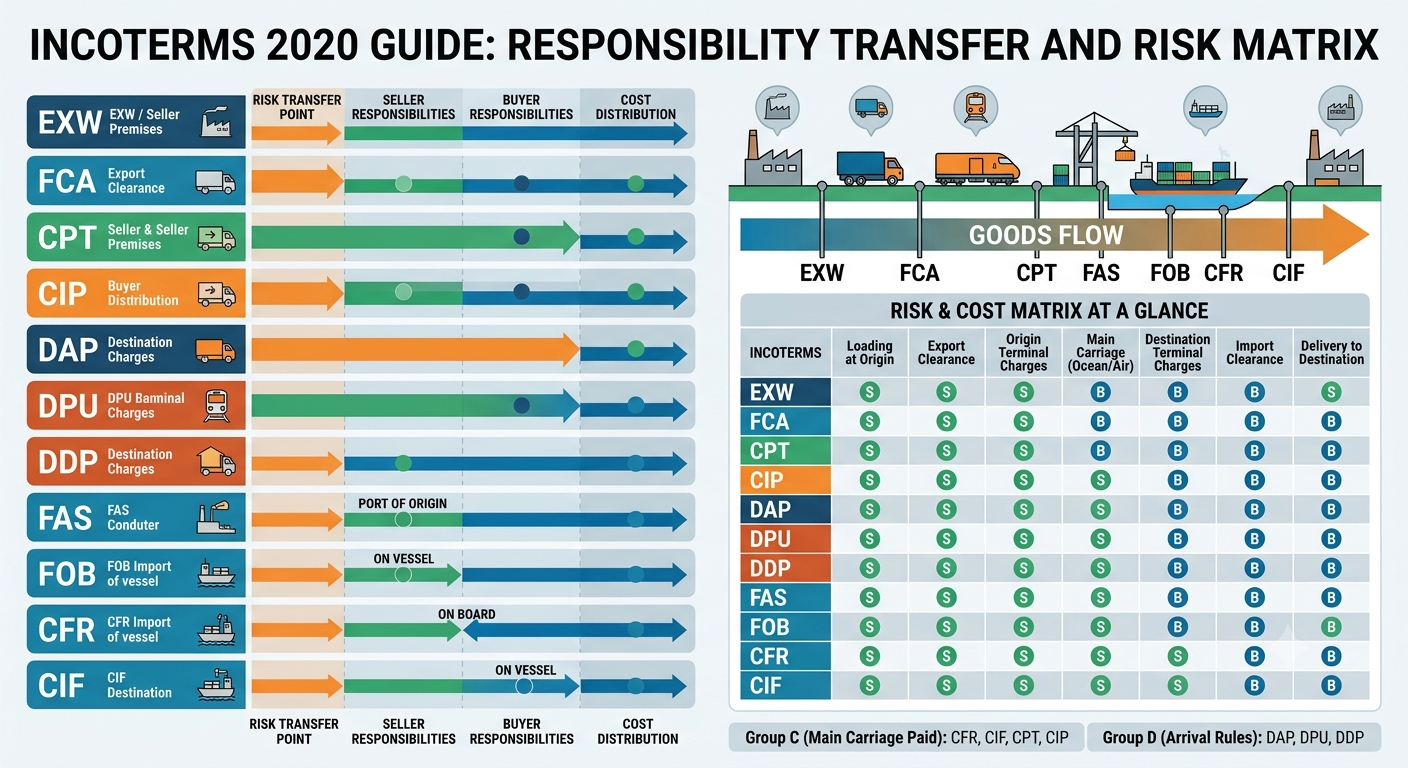
Incoterms are one of the most important concepts in international trade. They help exporters and importers understand who is responsible for transportation, costs, delivery, insurance and risk during an international shipment.
The current edition is Incoterms 2020. It contains 11 Incoterms rules that are widely used in international sales contracts.
The 11 Incoterms 2020 rules are: EXW, FCA, CPT, CIP, DAP, DPU, DDP, FAS, FOB, CFR and CIF.
What Are Incoterms?
Incoterms means International Commercial Terms. They are standardized trade rules used in contracts for the sale of goods. They explain important responsibilities between the seller and buyer.
Incoterms help determine who arranges transportation, export clearance, delivery, insurance and certain costs, as well as when risk transfers from the seller to the buyer.
How Do Incoterms Work?
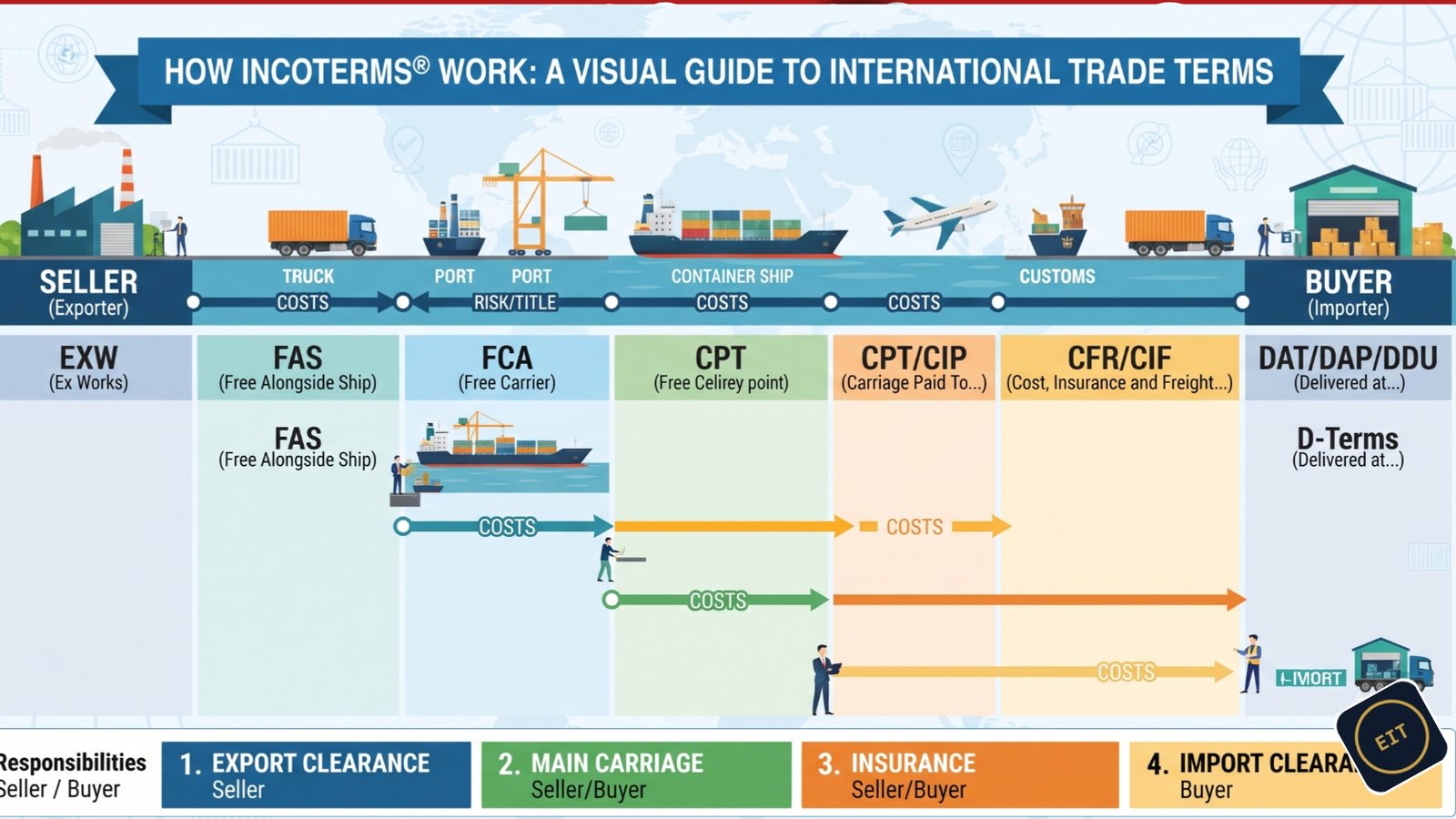
Incoterms work by dividing specific responsibilities between the seller and buyer. The selected Incoterm determines which party handles different parts of the shipping and delivery process.
For example, under one Incoterm the seller may arrange transportation, while under another the buyer may arrange the main carriage.
What Are the 11 Incoterms Rules?
| Incoterm | Full Form | Transport |
|---|---|---|
| EXW | Ex Works | Any mode |
| FCA | Free Carrier | Any mode |
| CPT | Carriage Paid To | Any mode |
| CIP | Carriage and Insurance Paid To | Any mode |
| DAP | Delivered at Place | Any mode |
| DPU | Delivered at Place Unloaded | Any mode |
| DDP | Delivered Duty Paid | Any mode |
| FAS | Free Alongside Ship | Sea / Inland Waterway |
| FOB | Free On Board | Sea / Inland Waterway |
| CFR | Cost and Freight | Sea / Inland Waterway |
| CIF | Cost, Insurance and Freight | Sea / Inland Waterway |
1. EXW – Ex Works
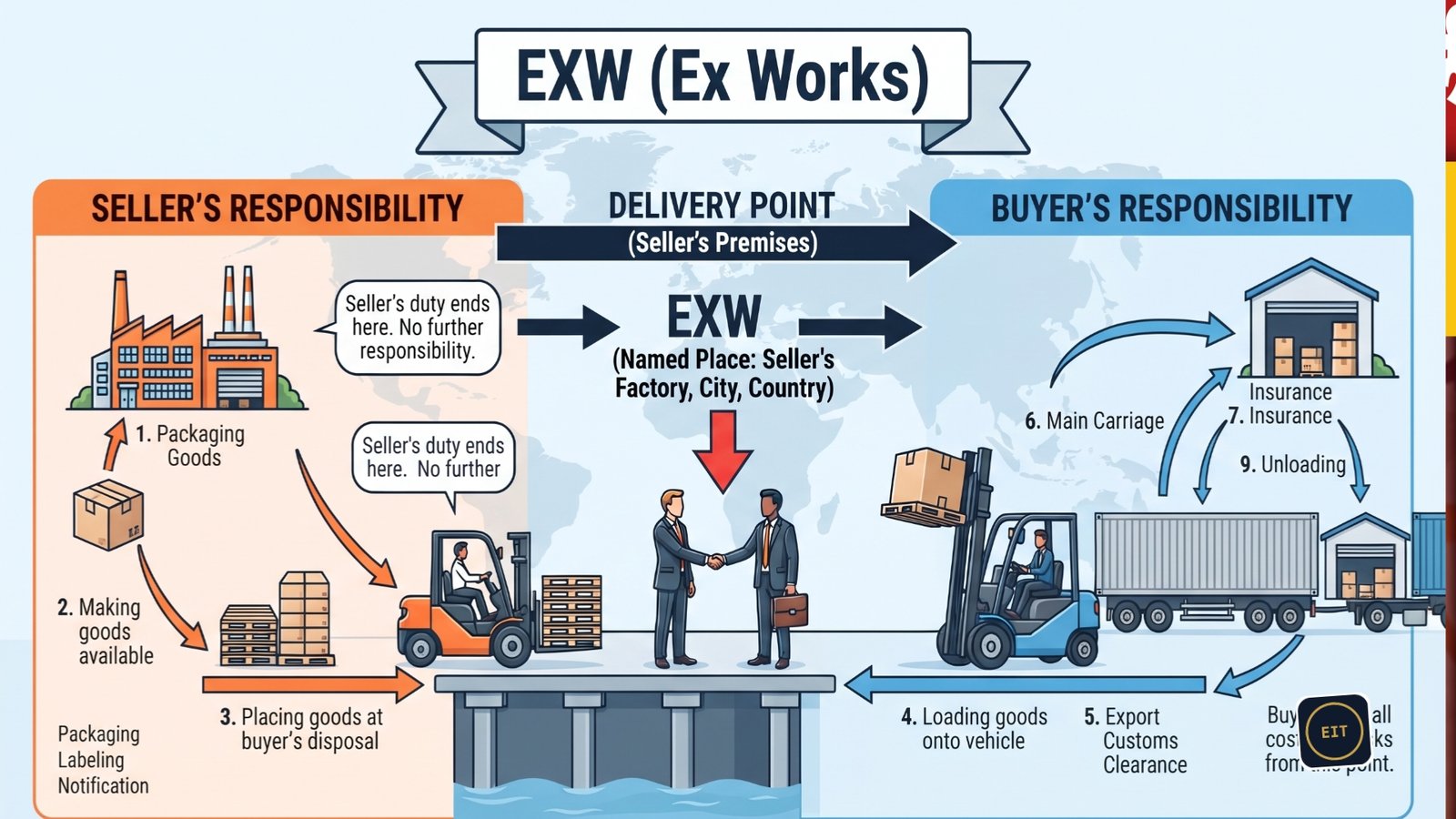
EXW means Ex Works. The seller generally makes the goods available at the agreed location. The buyer takes responsibility for arranging much of the transportation and logistics.
EXW may provide the seller with limited delivery responsibility, but exporters should consider whether EXW is suitable for their specific international transaction.
2. FCA – Free Carrier
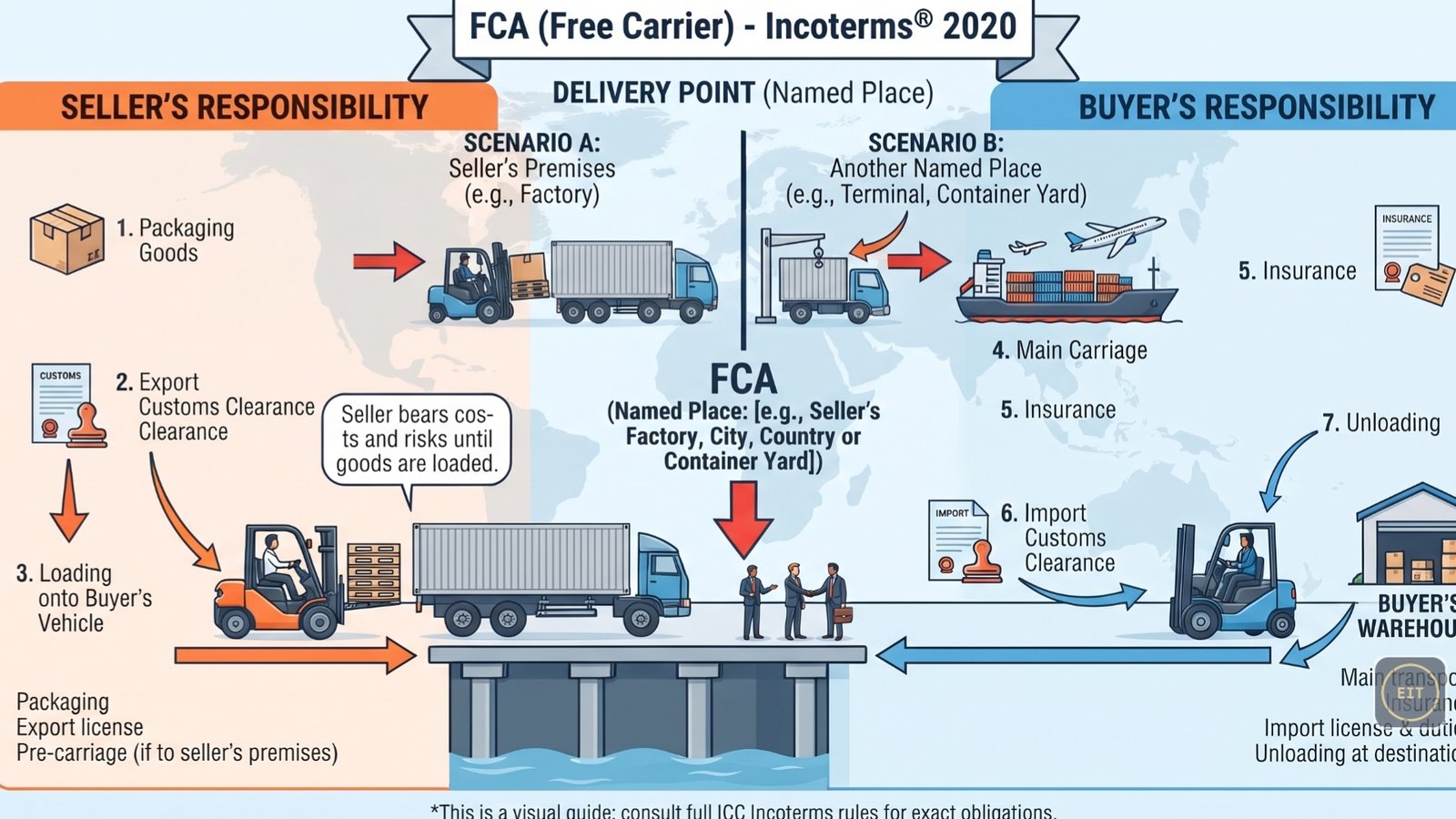
FCA means Free Carrier. The seller delivers the goods to the carrier or another person nominated by the buyer at the agreed place.
FCA is particularly useful for containerized cargo and multimodal transportation.
3. CPT – Carriage Paid To

CPT means Carriage Paid To. The seller arranges and pays for carriage to the named destination. However, risk transfers when the goods are handed over to the carrier according to the rule.
4. CIP – Carriage and Insurance Paid To

CIP means Carriage and Insurance Paid To. It is similar to CPT, but the seller also arranges insurance as required by the rule.
5. DAP – Delivered at Place

DAP means Delivered at Place. The seller arranges transportation to the agreed destination and generally bears the risk until the goods are made available to the buyer at that place, ready for unloading.
6. DPU – Delivered at Place Unloaded

DPU means Delivered at Place Unloaded. The seller is responsible for delivering and unloading the goods at the named destination.
7. DDP – Delivered Duty Paid

DDP means Delivered Duty Paid. It generally places extensive delivery and import-related responsibilities on the seller.
Exporters should understand destination-country customs, duties, taxes and regulatory requirements before offering DDP.
8. FAS – Free Alongside Ship

FAS means Free Alongside Ship. The seller delivers the goods alongside the vessel at the agreed port of shipment.
9. FOB – Free On Board

FOB means Free On Board. It is designed for sea and inland waterway transport.
The seller delivers the goods on board the vessel nominated by the buyer at the agreed port of shipment. Risk transfers when the goods are on board the vessel.
10. CFR – Cost and Freight

CFR means Cost and Freight. The seller arranges and pays for carriage to the named destination port, while risk transfers earlier when the goods are on board the vessel at the port of shipment.
11. CIF – Cost, Insurance and Freight

CIF means Cost, Insurance and Freight. It is designed for sea and inland waterway transport.
The seller arranges carriage to the named destination port and obtains insurance as required by the rule.
What Is FOB, CIF and DDP?

| Term | Main Idea | Transport |
|---|---|---|
| FOB | Seller delivers goods on board vessel | Sea / Inland Waterway |
| CIF | Seller pays cost, insurance and freight to destination port | Sea / Inland Waterway |
| DDP | Seller has extensive delivery and import responsibilities | Any mode |
What Are the 6 Major Incoterms?
There is no official ICC category called the “six major Incoterms”. However, EXW, FCA, FOB, CIF, DAP and DDP are frequently discussed in international trade because they represent common delivery arrangements.
What Are the Four Most Used Incoterms?
FOB, CIF, EXW and DDP are frequently encountered Incoterms. Actual usage varies depending on country, industry, commodity, buyer requirements and transport mode.
Incoterms for Any Mode of Transport
- EXW – Ex Works
- FCA – Free Carrier
- CPT – Carriage Paid To
- CIP – Carriage and Insurance Paid To
- DAP – Delivered at Place
- DPU – Delivered at Place Unloaded
- DDP – Delivered Duty Paid
Incoterms for Sea and Inland Waterway Transport
- FAS – Free Alongside Ship
- FOB – Free On Board
- CFR – Cost and Freight
- CIF – Cost, Insurance and Freight
FOB vs CIF: What Is the Difference?

FOB and CIF are both designed for sea and inland waterway transport. Under FOB, the seller delivers the goods on board the vessel. Under CIF, the seller also arranges and pays for freight and insurance to the named destination port.
CIF vs CFR: What Is the Difference?

CIF and CFR are similar because the seller arranges and pays for carriage to the named destination port. The key difference is that CIF also includes an insurance obligation for the seller.
FOB vs DDP: What Is the Difference?
FOB and DDP represent very different delivery structures. FOB is used for sea and inland waterway transport, while DDP generally places extensive delivery and import-related responsibilities on the seller.
How to Choose the Right Incoterm?
Choose an Incoterm based on the product, transportation mode, destination, buyer requirements, customs regulations, logistics capabilities and desired allocation of costs and risks.
Before quoting an international buyer, calculate product cost, packaging, inland transportation, documentation, freight, insurance, customs charges, destination charges, duties, taxes and local delivery.
Incoterms and Export Costing

Incoterms directly affect export costing because different rules allocate different transportation and delivery expenses between the seller and buyer.
Understanding Incoterms before preparing a quotation can help exporters avoid unexpected freight and destination costs.
Common Incoterms Mistakes to Avoid
- Choosing an Incoterm without checking the transport mode.
- Confusing cost transfer with risk transfer.
- Assuming CIF means seller carries all risk until destination.
- Offering DDP without understanding destination customs.
- Not specifying the named place or port.
- Ignoring destination charges.
- Not checking insurance requirements.
- Comparing quotations without checking the Incoterm.
- Using FOB automatically for every container shipment.
- Failing to calculate total landed cost.
Frequently Asked Questions About Incoterms
What are the 11 Incoterms rules?
The 11 Incoterms 2020 rules are EXW, FCA, CPT, CIP, DAP, DPU, DDP, FAS, FOB, CFR and CIF.
What are the 6 major Incoterms?
There is no official ICC category called the six major Incoterms. EXW, FCA, FOB, CIF, DAP and DDP are frequently discussed in international trade.
What is FOB, CIF and DDP?
FOB means Free On Board, CIF means Cost Insurance and Freight, and DDP means Delivered Duty Paid. Each Incoterm allocates costs, risks and responsibilities differently.
What are the four most used Incoterms?
FOB, CIF, EXW and DDP are frequently encountered Incoterms, although usage varies by country, industry and transport method.
Which Incoterm is best for exporters?
There is no single best Incoterm. The correct choice depends on the product, transport mode, destination, buyer requirements, customs obligations and logistics capability.
Is FOB better than CIF?
Neither FOB nor CIF is universally better. The correct choice depends on transportation, insurance, costs, risks and the commercial agreement.
What is the difference between CIF and CFR?
Under both CIF and CFR the seller arranges carriage to the named destination port. CIF additionally requires the seller to arrange insurance according to the rule.
Is DDP risky for exporters?
DDP can create significant responsibilities for exporters because the seller generally handles extensive delivery and import-related obligations.
Can Incoterms be used for air freight?
Yes. FCA, CPT, CIP, DAP, DPU and DDP can be used with air freight because they are designed for any mode of transport.
Final Conclusion
Understanding Incoterms is essential for exporters, importers and international trading companies. The 11 Incoterms 2020 rules help businesses understand delivery responsibilities, transportation costs, insurance and risk transfer.
Before accepting an international order, always check the exact Incoterm, named place or port, transport mode, insurance requirements, customs responsibilities, duties, taxes and total landed cost.